Derek
Watson



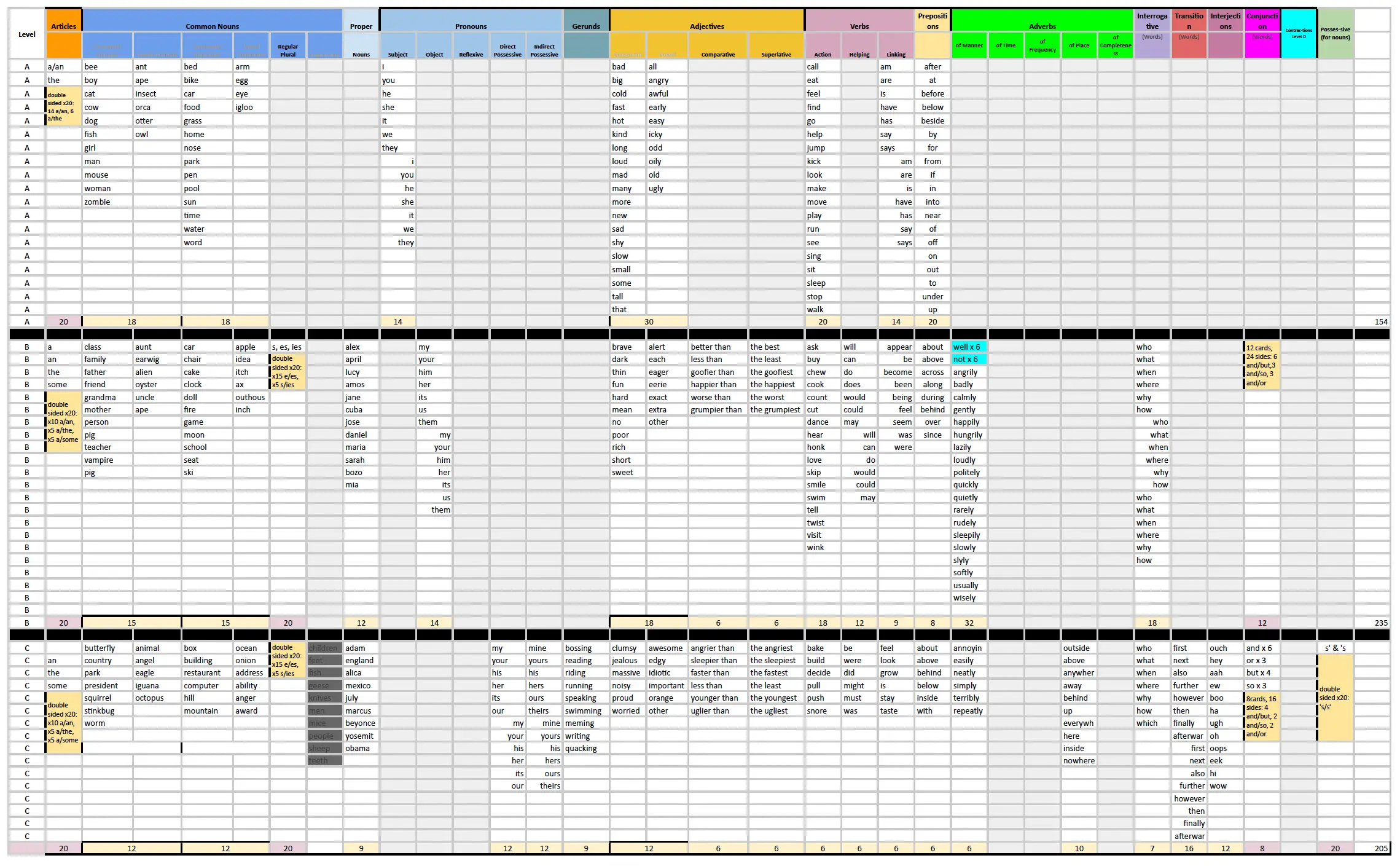
Sentence Soup's creator, Ed Poritt, had laid his game's structure out through the use of many complex, multi-tabbed spreadsheets. When my team was handed these in the discovery phase they left us all blurry-eyed and baffled as to how they related to game play. We needed to understand the game through the context of its simplest form: one round of game play.
Sentence Soup's creator, Ed Poritt, had laid his game's structure out through the use of many complex, multi-tabbed spreadsheets. When my team was handed these in the discovery phase they left us all blurry-eyed and baffled as to how they related to game play. We needed to understand the game through the context of its simplest form: one round of game play.
Fortunately Ed was able to set up a session of game play with some neighborhood kids that we could observe play the game, with Ed present to teach the game and keep it moving.
Taking into account that Ed was needed keep game play moving spurred an internal conversation about the inclusion of affordances that would give guidance as to what the next step should be.
It became obvious that we needed to make helpful features abundant otherwise gameplay would be stifled by "ok, what do I do next?". If Sentence Soup were to achieve its learning goals the User would need to be compelled to keep going in the absence of supervision.
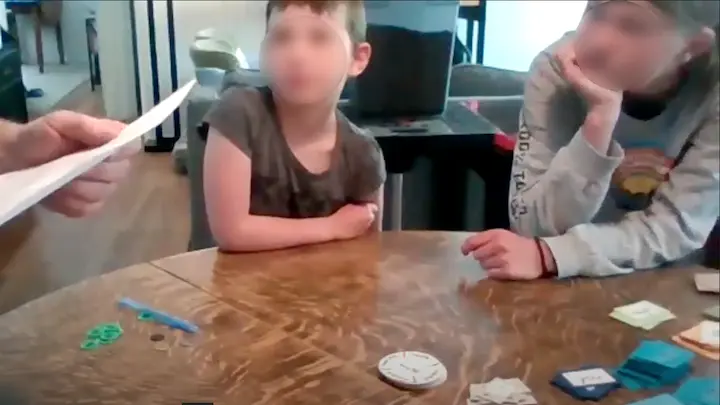
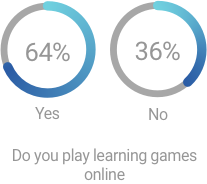
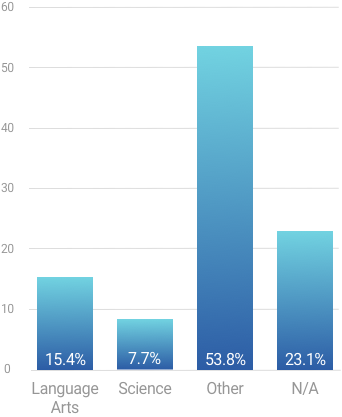
After observing game play we formulated surveys. Given that children would need some adult supervision, at least getting started, we gathered that we should understand both the parents and educators, as well as the children, our primary Users.
The biggest takeaways from our surveys were that:
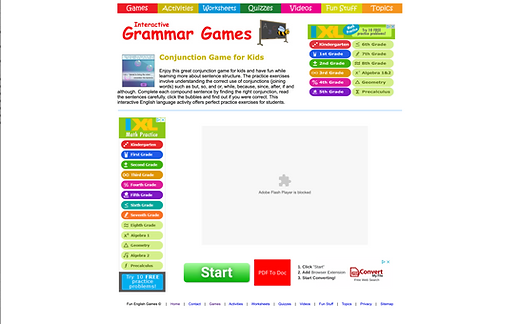
During the interview process, while waiting for people to get back to us, the team conducted competitive analysis by taking a deep dive into the world of online education games.
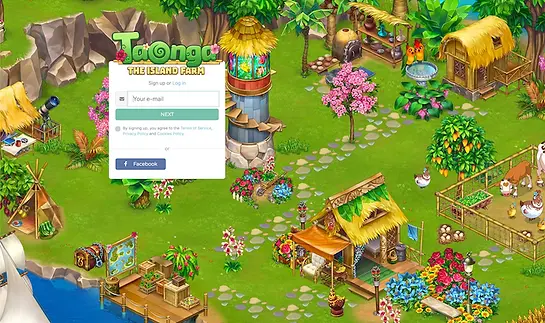
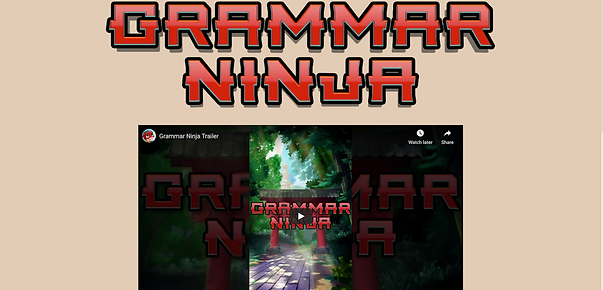
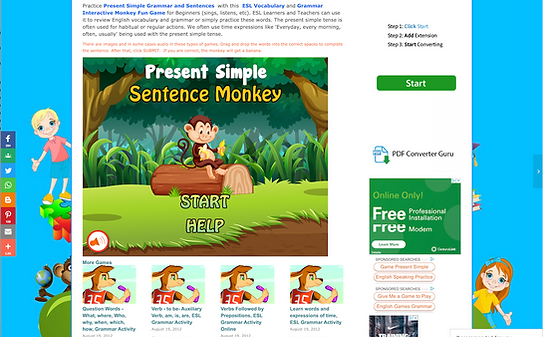
While there were myriad games online we didn't really come across any that would be true competitors with Sentence Soup. None approached the depth of learning that Sentence Soup promoted or even came close to the feature set that Ed envisioned. They either stopped at very rudimentary learning or attempted a "one-size-fits-all" approach to age-appropriateness.
Games were simply not meant to advance with the learner and quickly became moot.
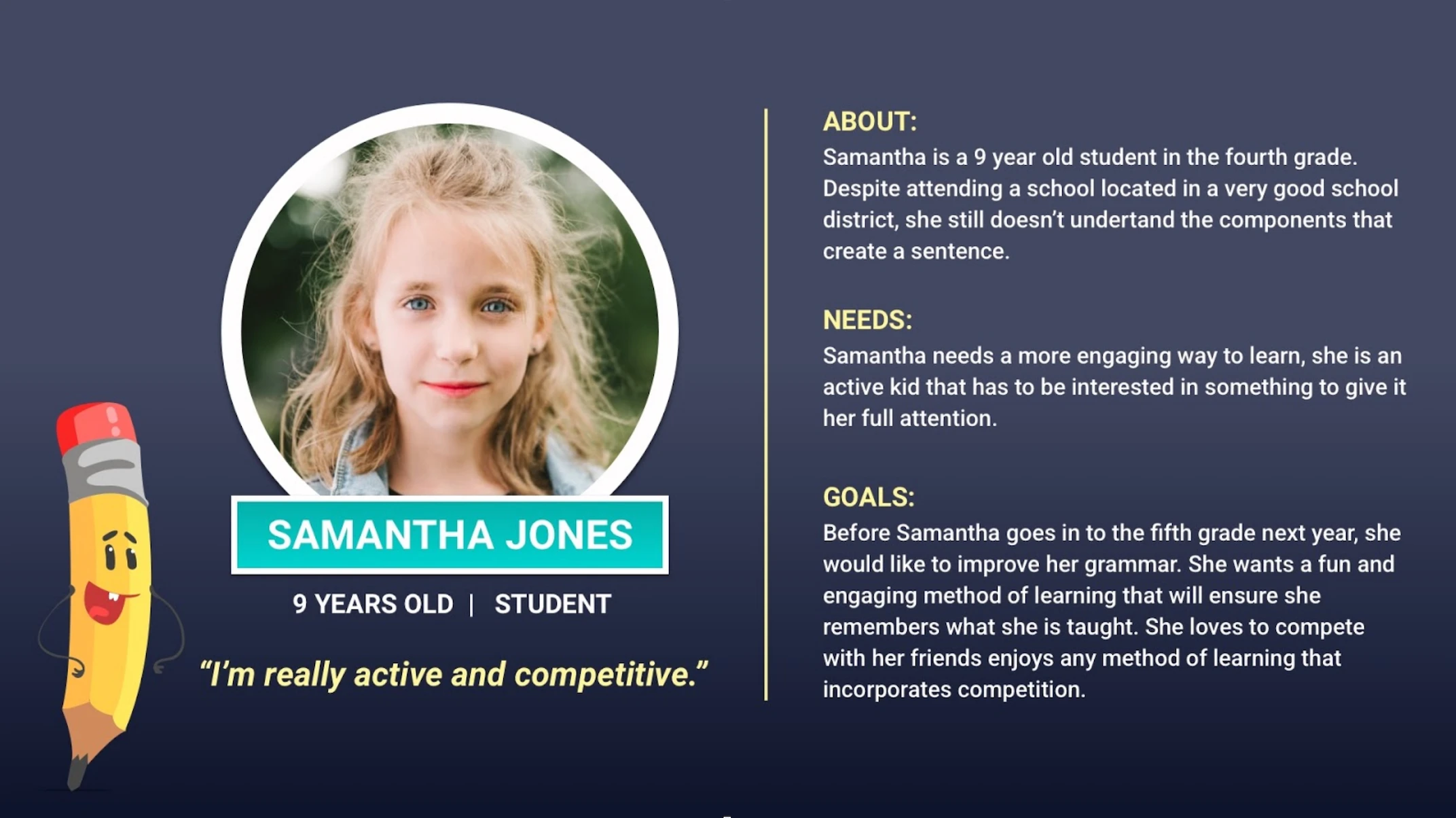
We decided that with the time allowed one persona could sufficiently illustrate the prototype's game play. Young Samantha provided the needed user archetype of a child who is motivated improve her grammar skills before heading into 5th grade.
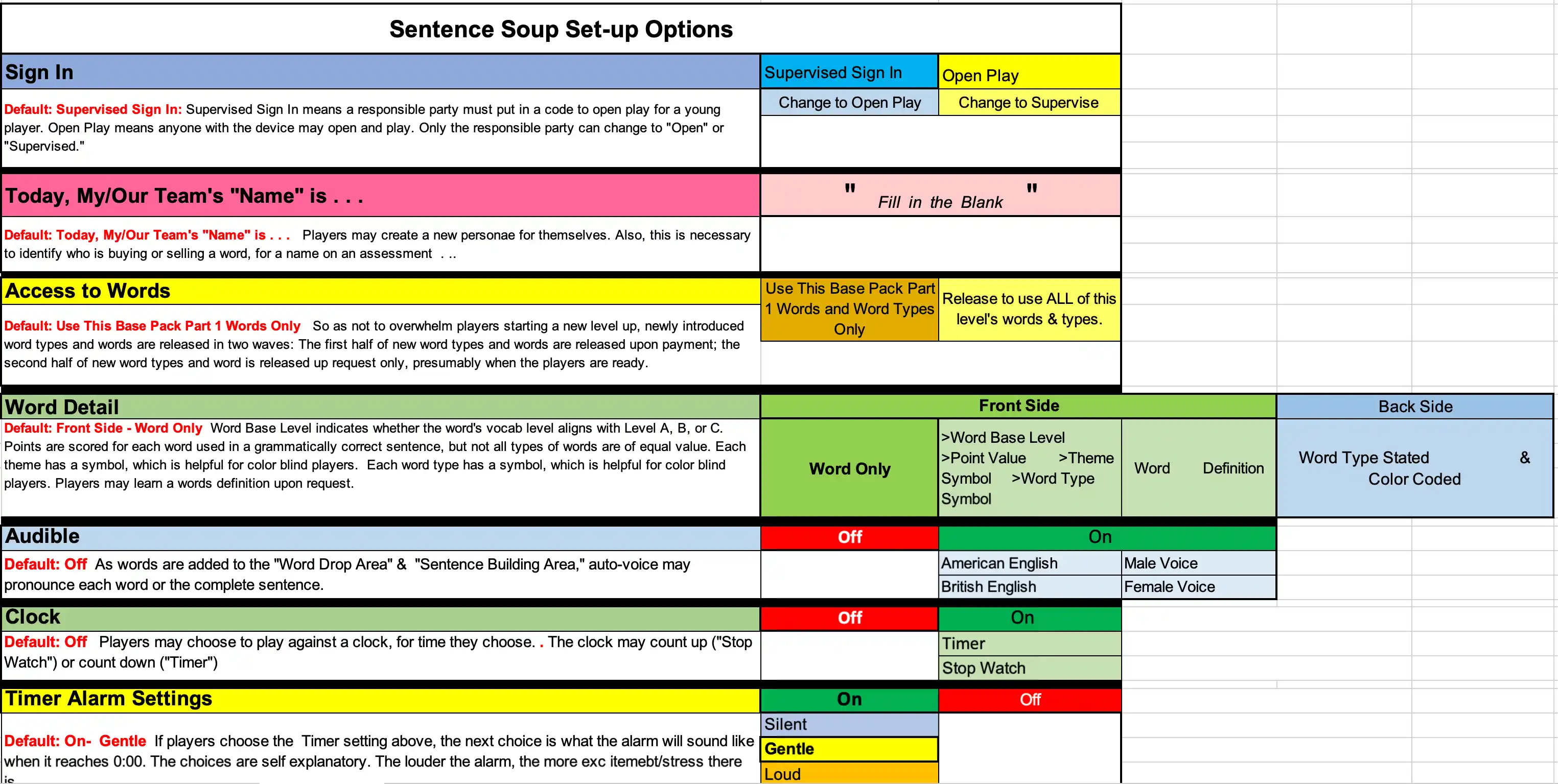
The most organized material that was handed over to us to assist our quest were many multi-tabbed Excel spreadsheets that the client had made to organize himself.
As part of our initial discovery we opened these files and our collective jaw dropped. We put the files away knowing that we'd need to revisit them at a later point, with Ed present to help us understand what we were looking at.
To his credit, he had devised a very elaborate structure of categorized word packages, themes, and a logical means of advancing students through learning.
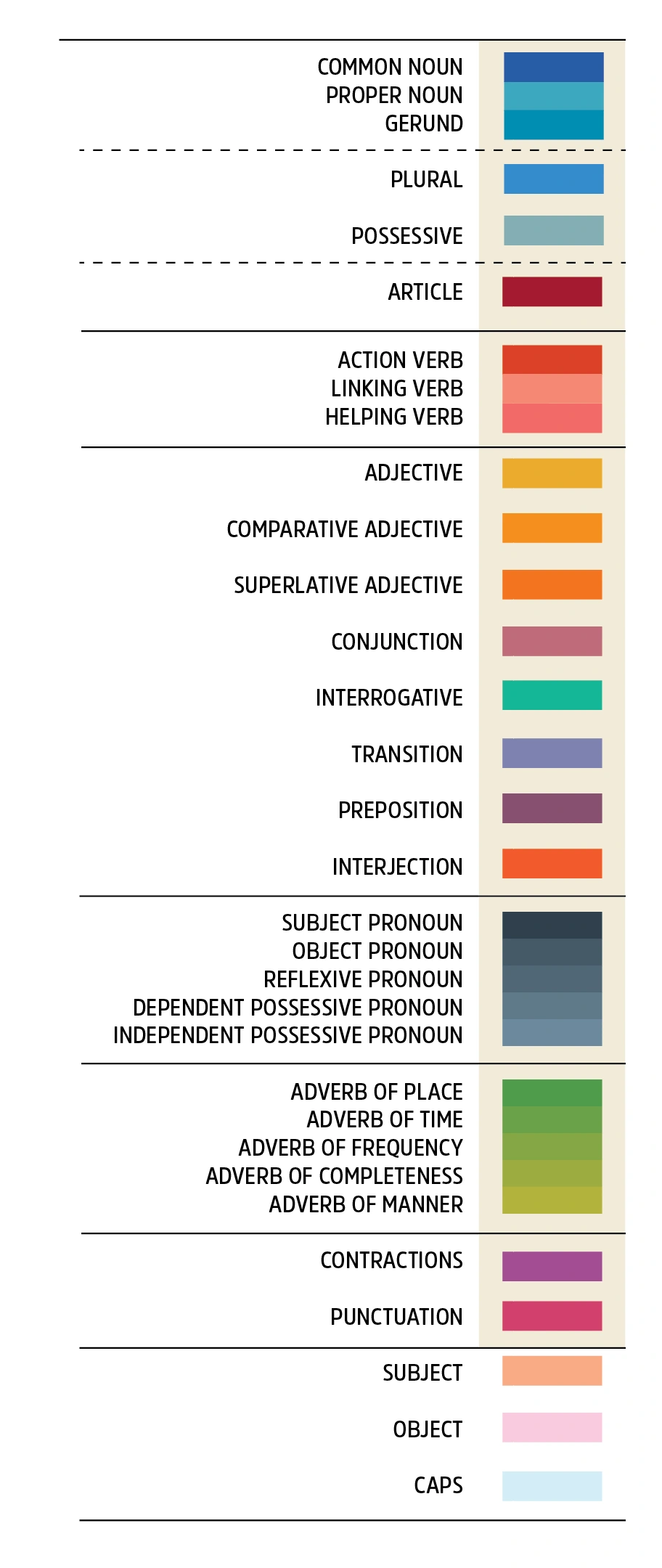
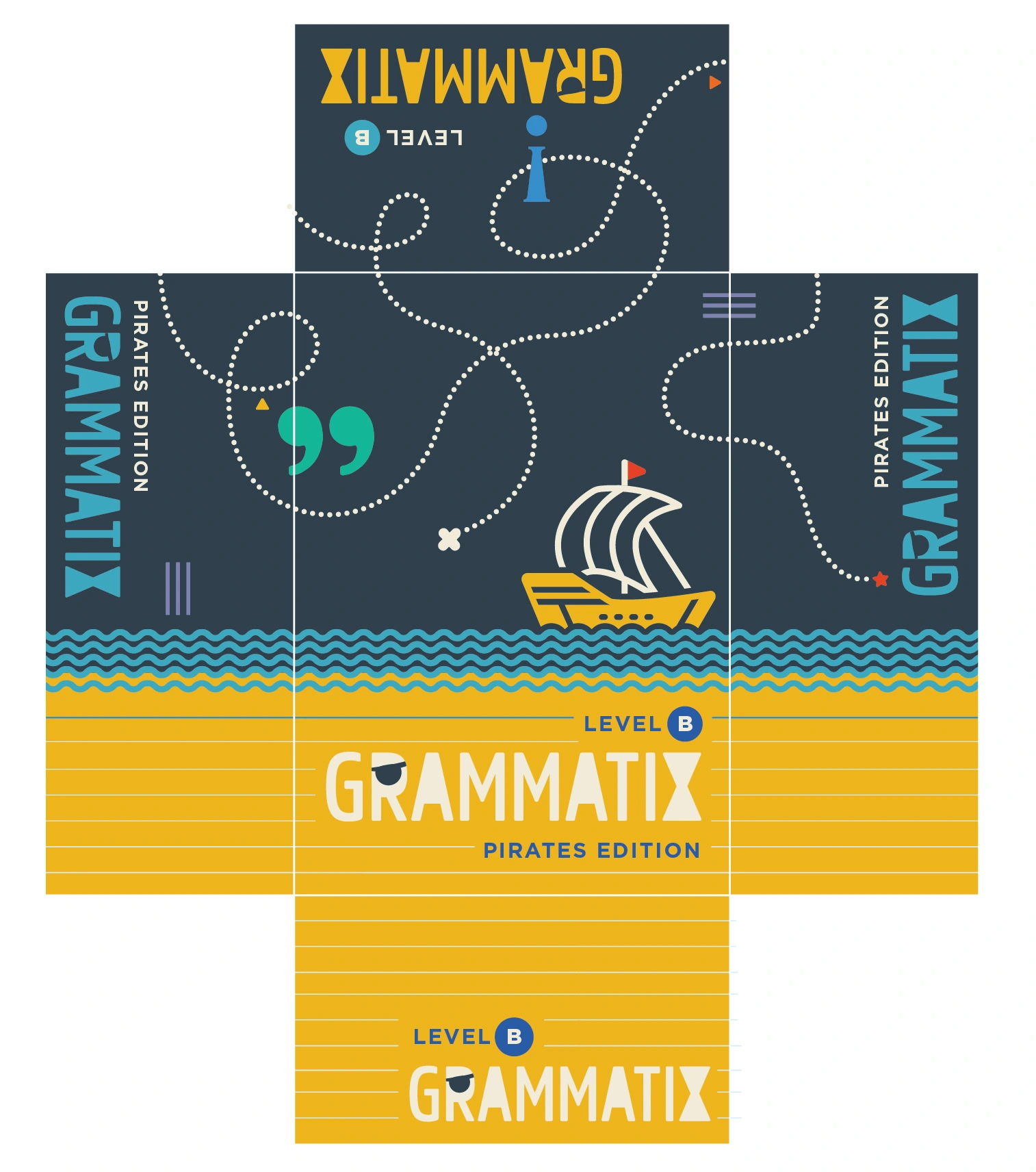
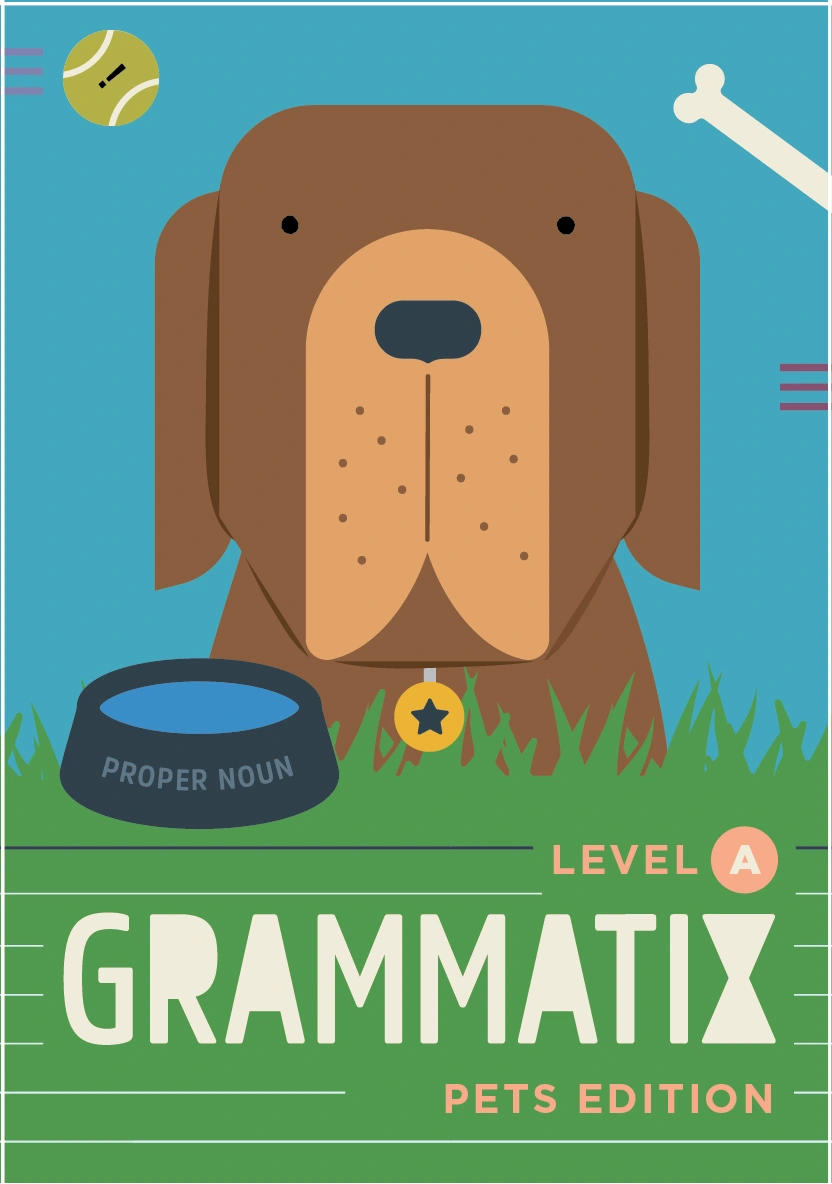
Our client had gone as far as hiring a graphic designer to design the packaging for the physical version and we were given access to these files from which to gleen an approved aesthetic.
From these files we were able to bypass the part of the design process that includes discovery of the client's style preferences.
We were able to borrow not only the color palette from the color styles guide but also create two new identities: one for Flash Fun Education, LLC and one for Sentence Soup, both of which appear at the top of this page.
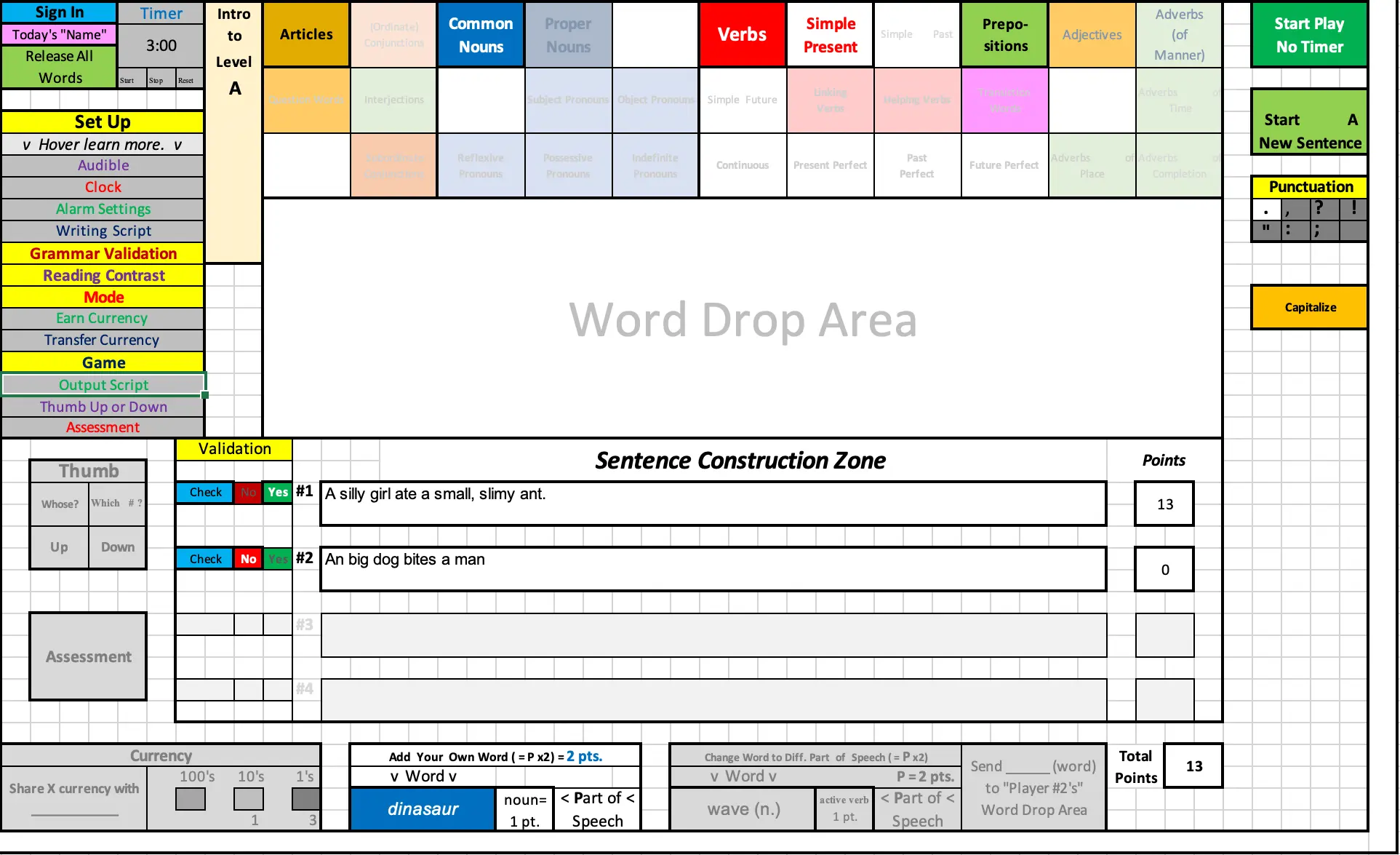
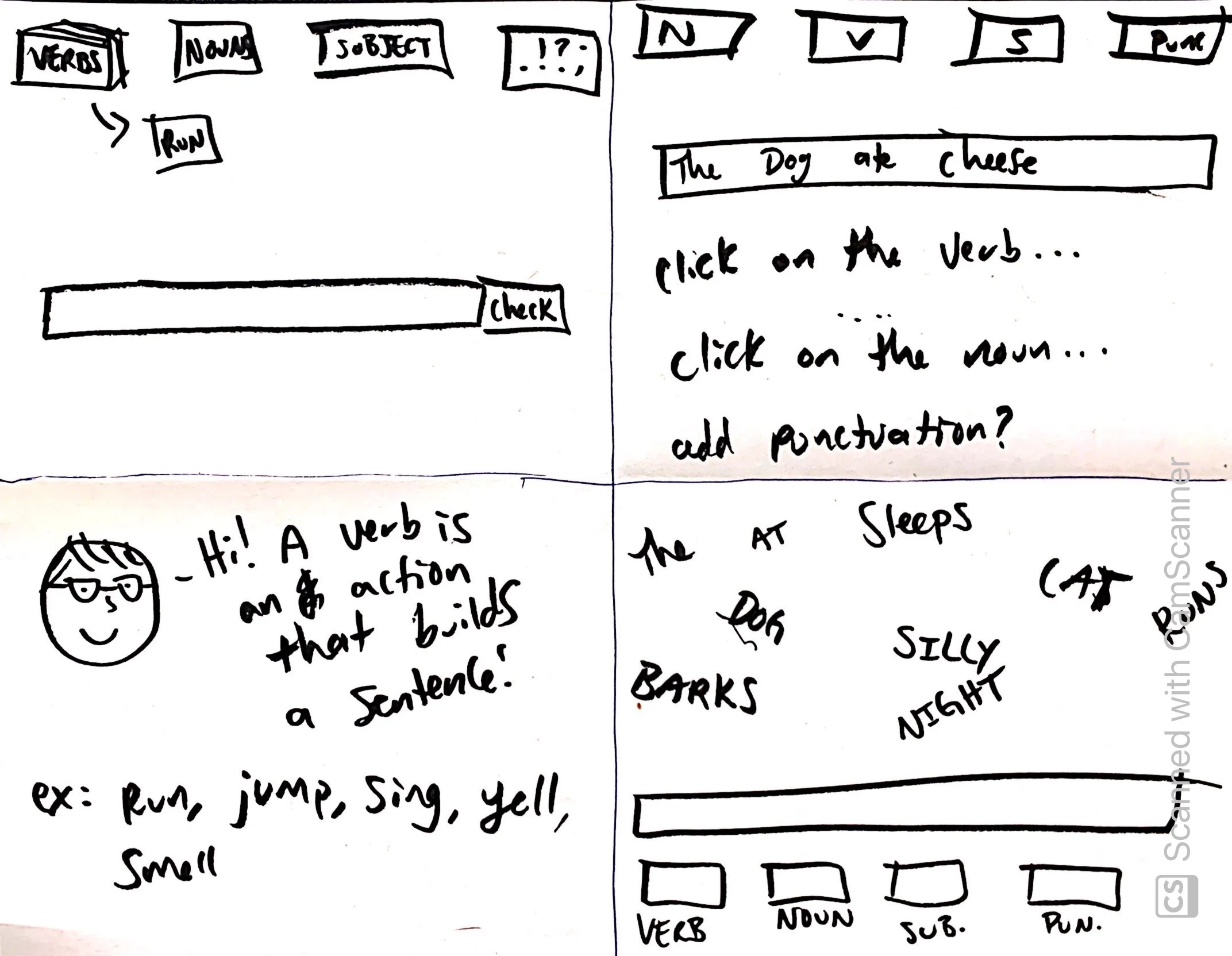
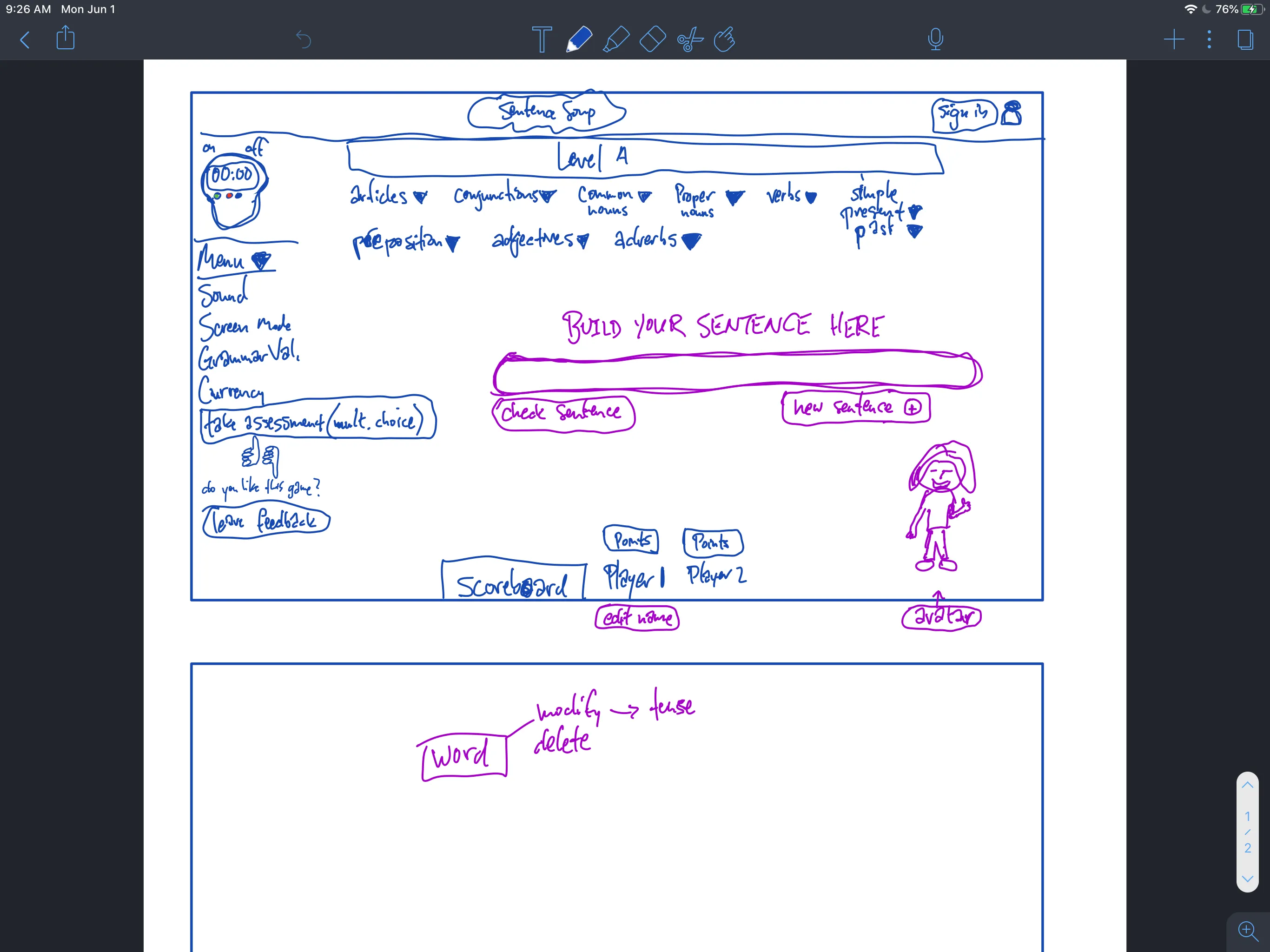
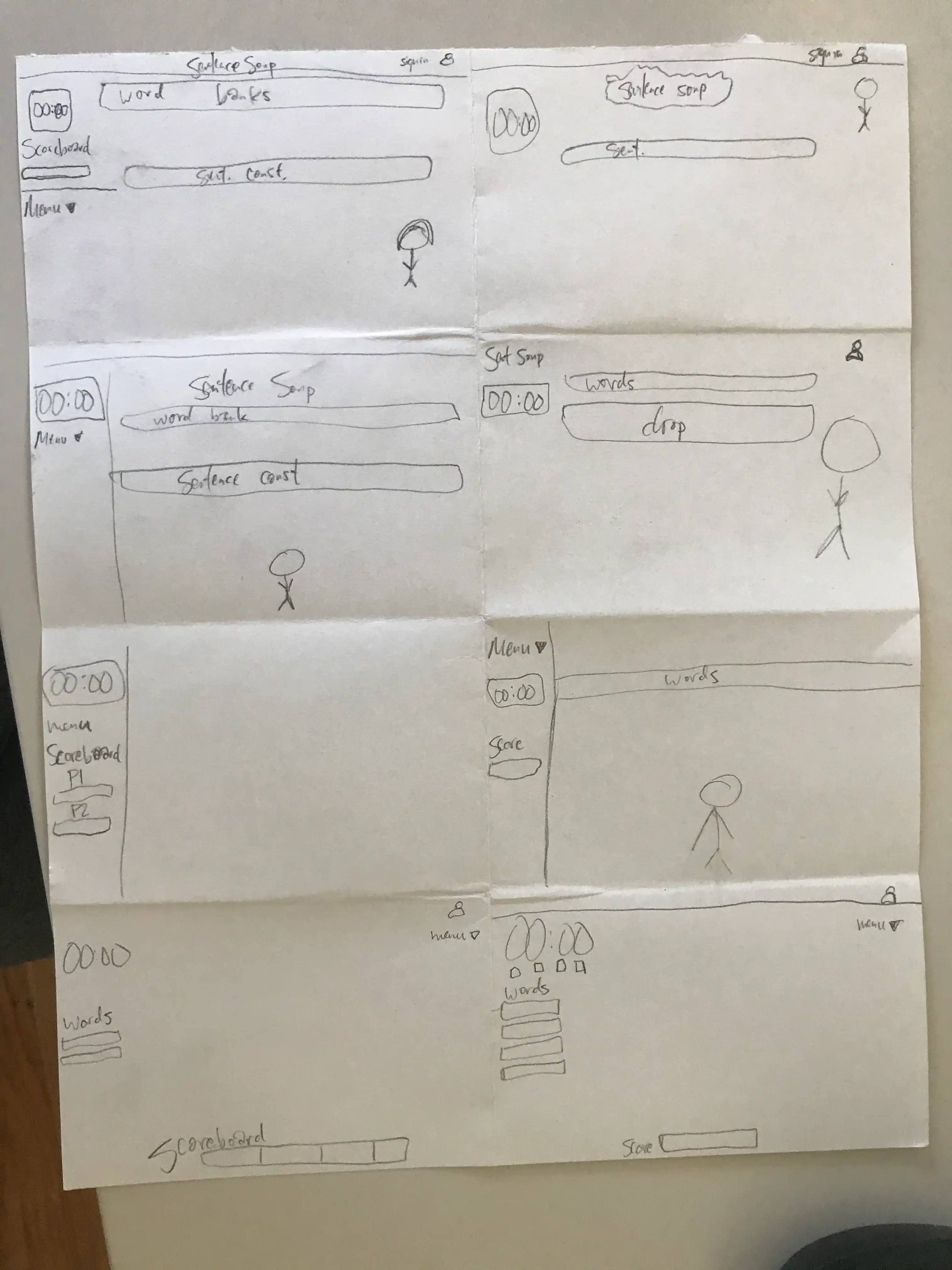
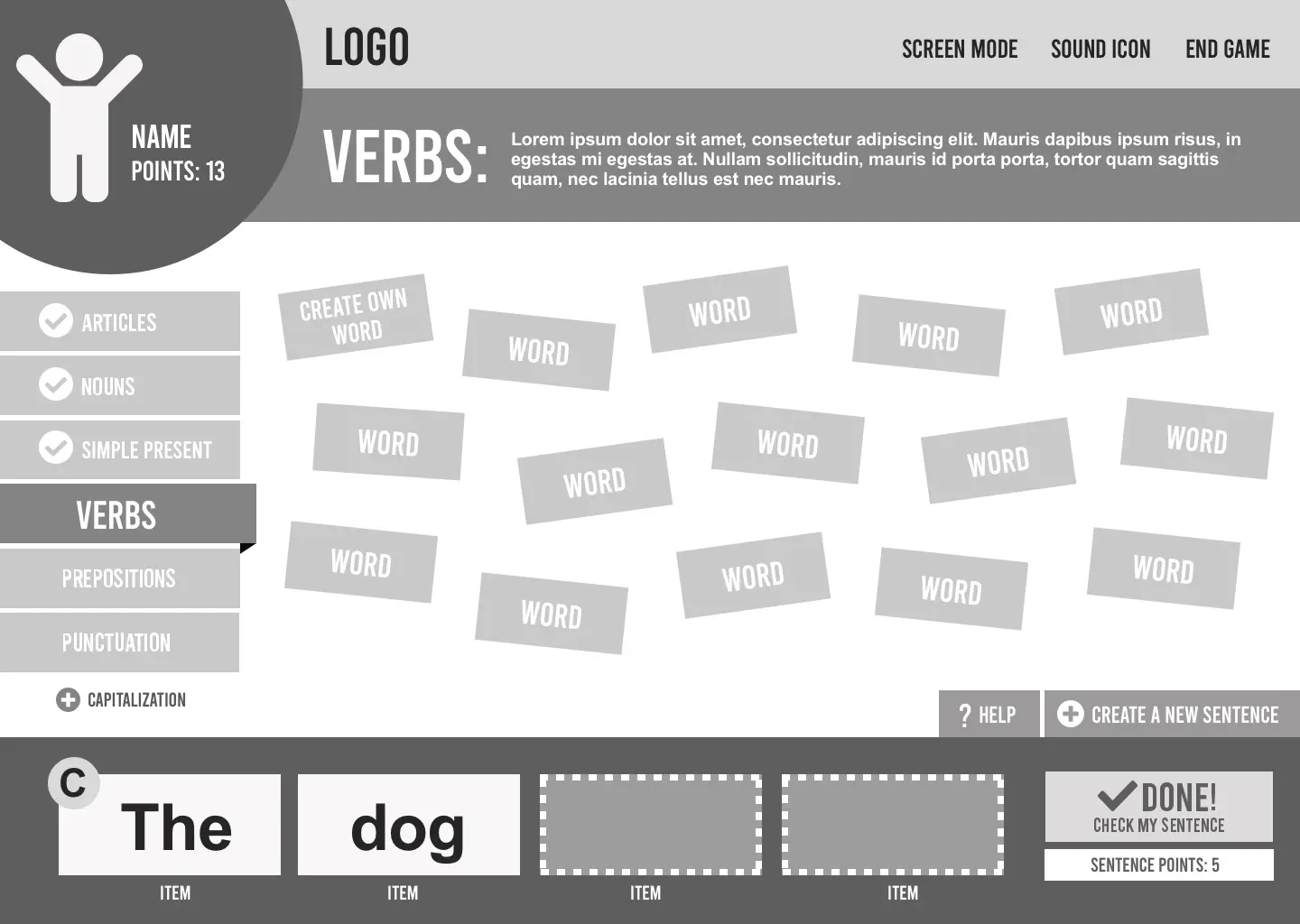
The team conducted a brief round of sketches but needed to quickly move into medium fidelity wireframes. The compressed timeline meant that each phase needed to move swiftly to allow time for user testing and iteration.
_LO%20FI.webp)
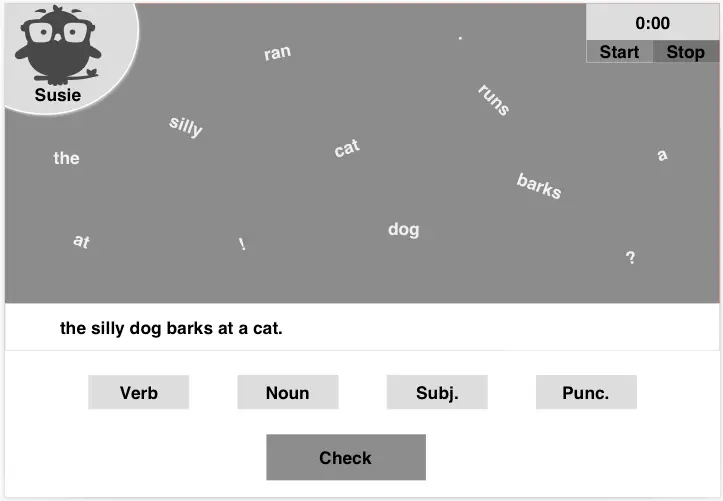
Given the compressed timeline we found relief in a relatively quick process of generating a client-approved design. We could now move on to higher fidelity and begin user testing. We found it necessary to bring prototypes into higher fidelity so that we could get feedback from our test subjects.
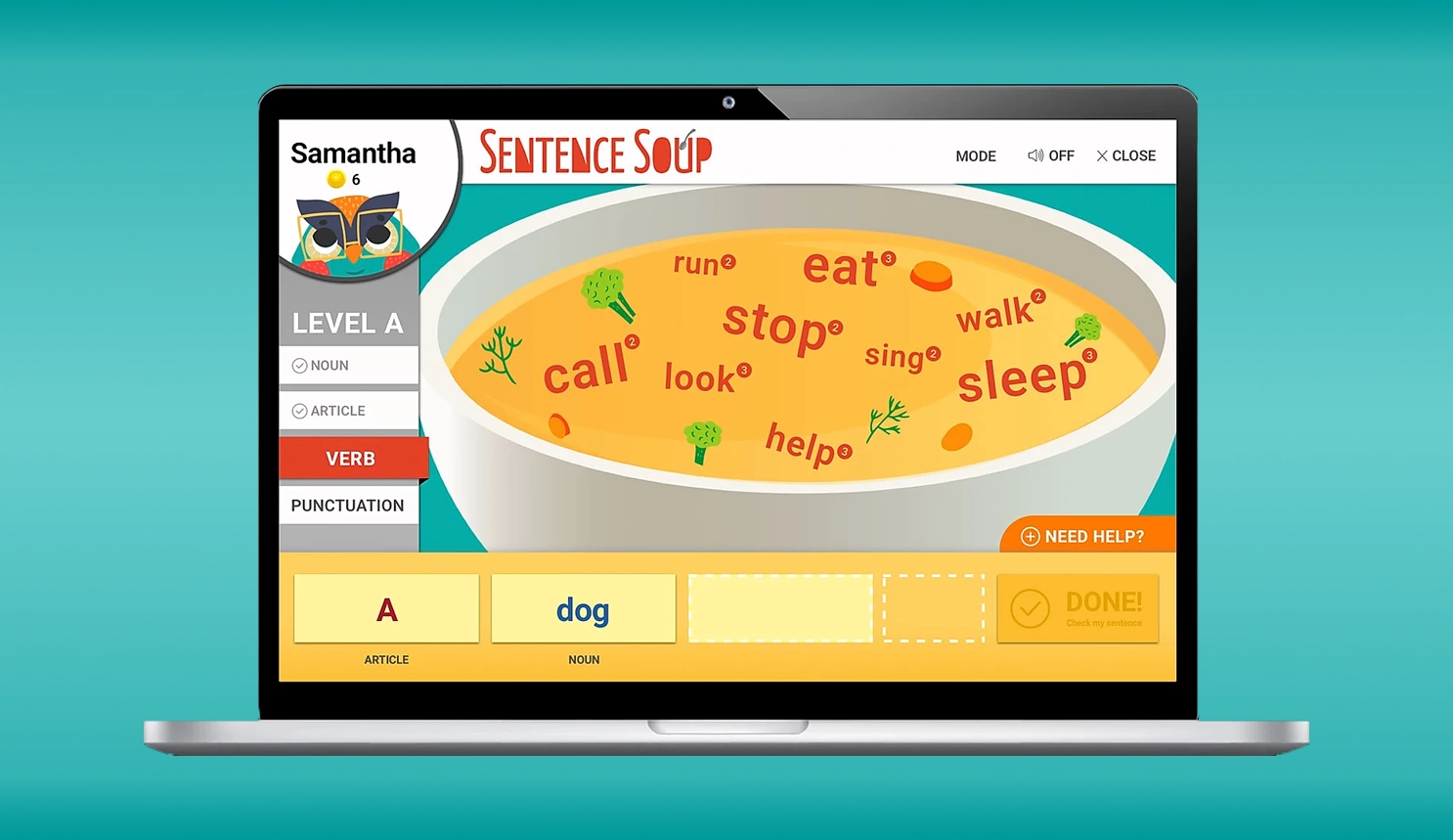
We explained the vision for the prototype as words suspended in soup as if the pasta letters of alphabet soup, an idea familiar to any child. The words would change depending on the phase of sentence building the player was on.
Once we had a high fidelity prototype we were able to conduct user testing sessions with three children, ages 9, 13, and 15.
Key Takeaways:
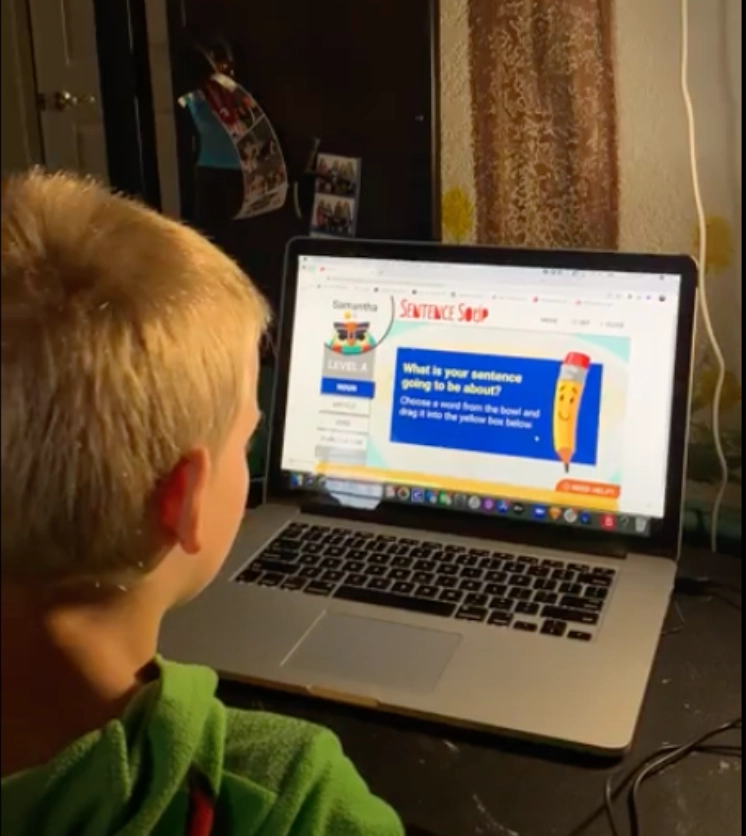
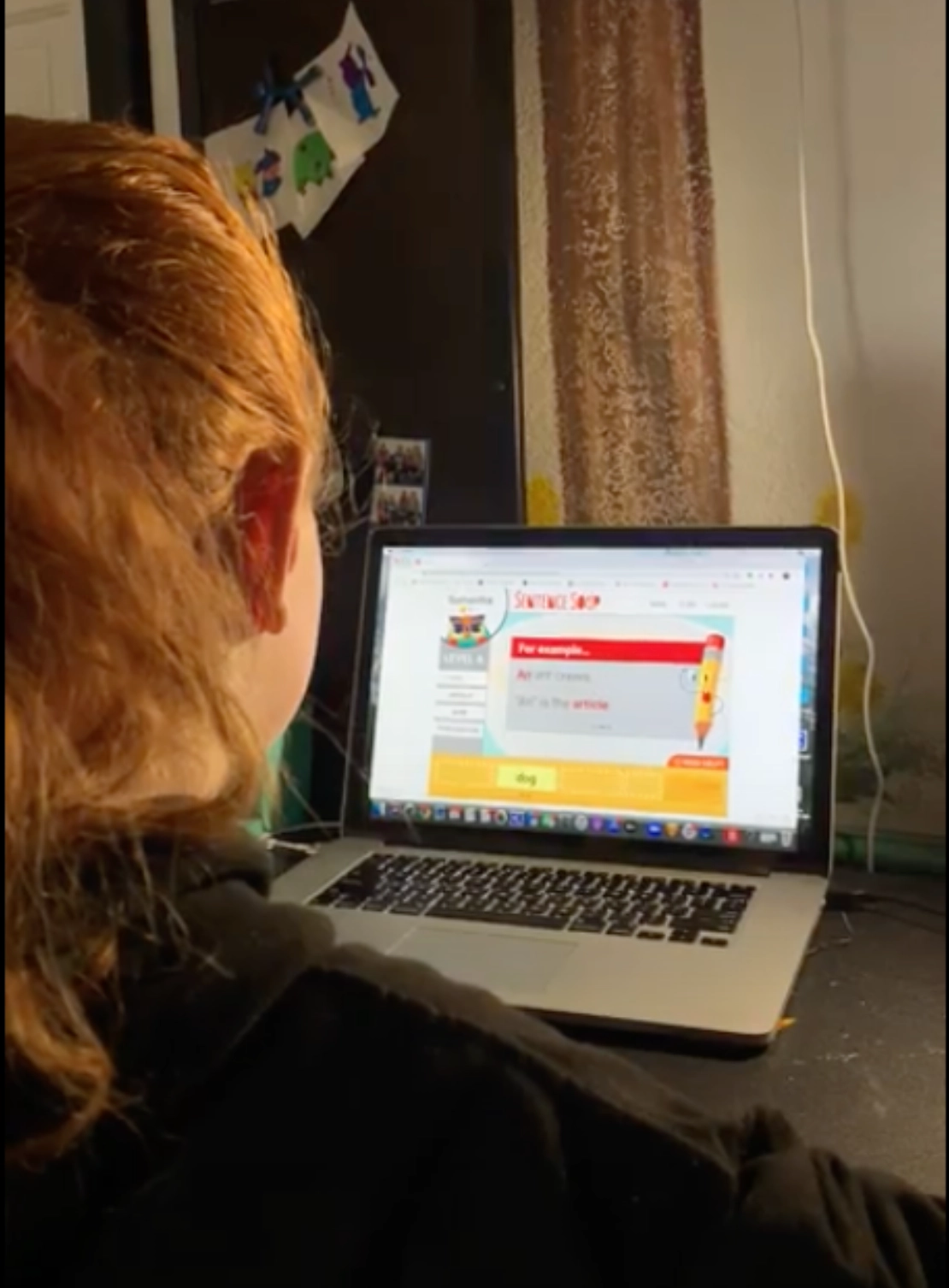
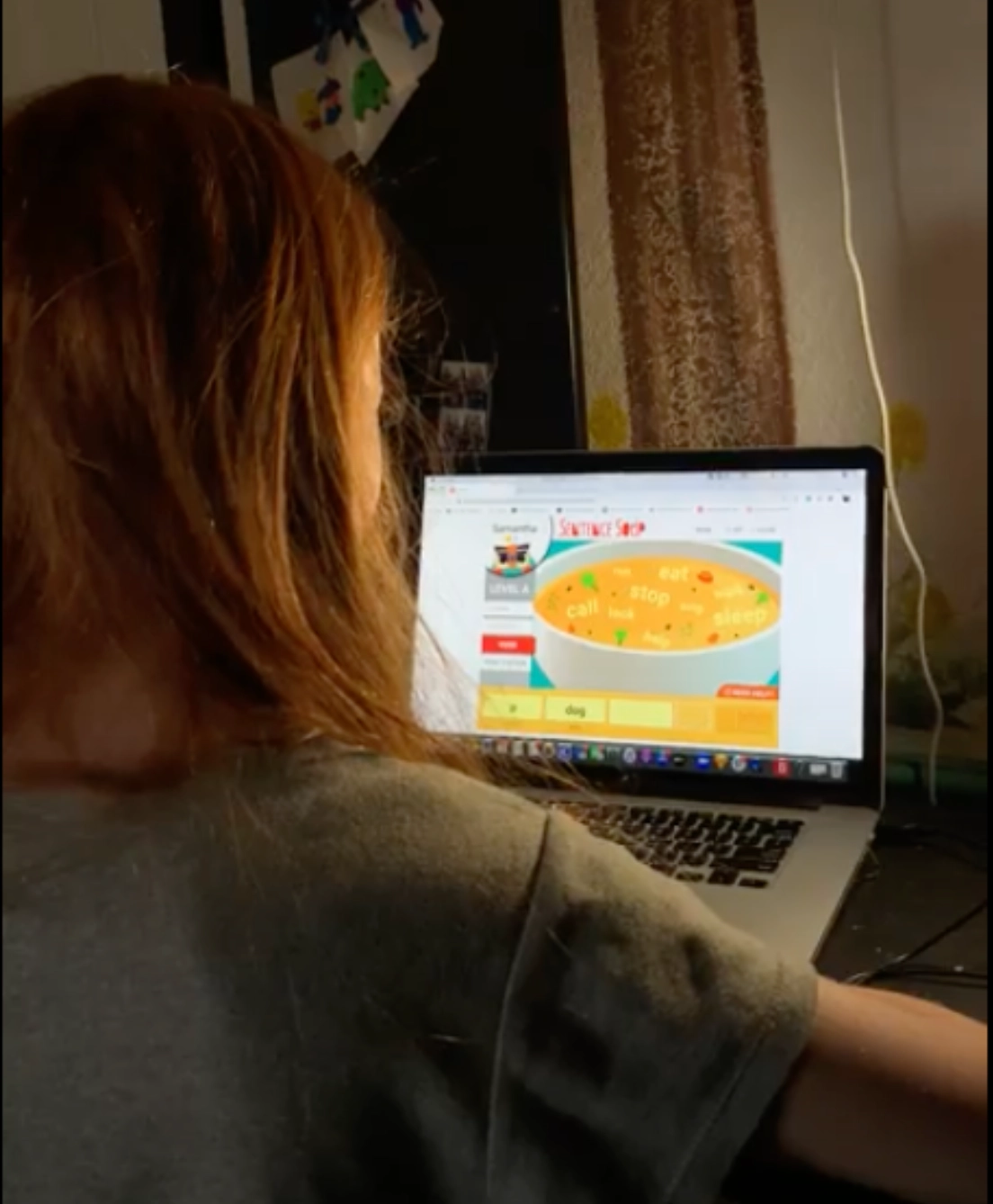
After the user testing and implementing the feedback we felt that the process had yielded notable and validated results for the final prototype.
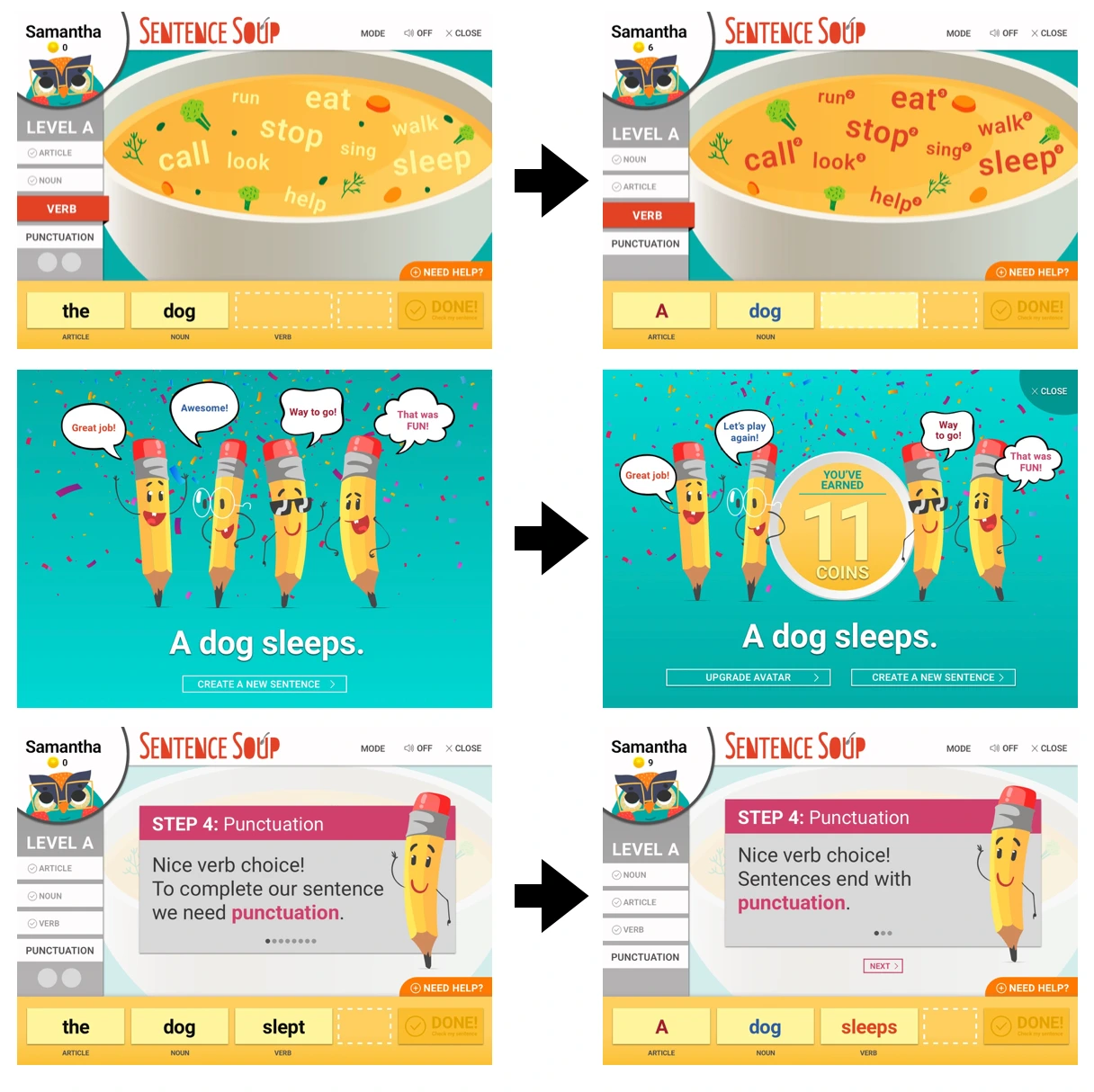
Finally, all was brought to together in a final prototype. Well received, the client approved of our solutions and felt that they had sufficient assets to bring to his team of designers, developers, and potential stakeholders to seek funding for further development.
